
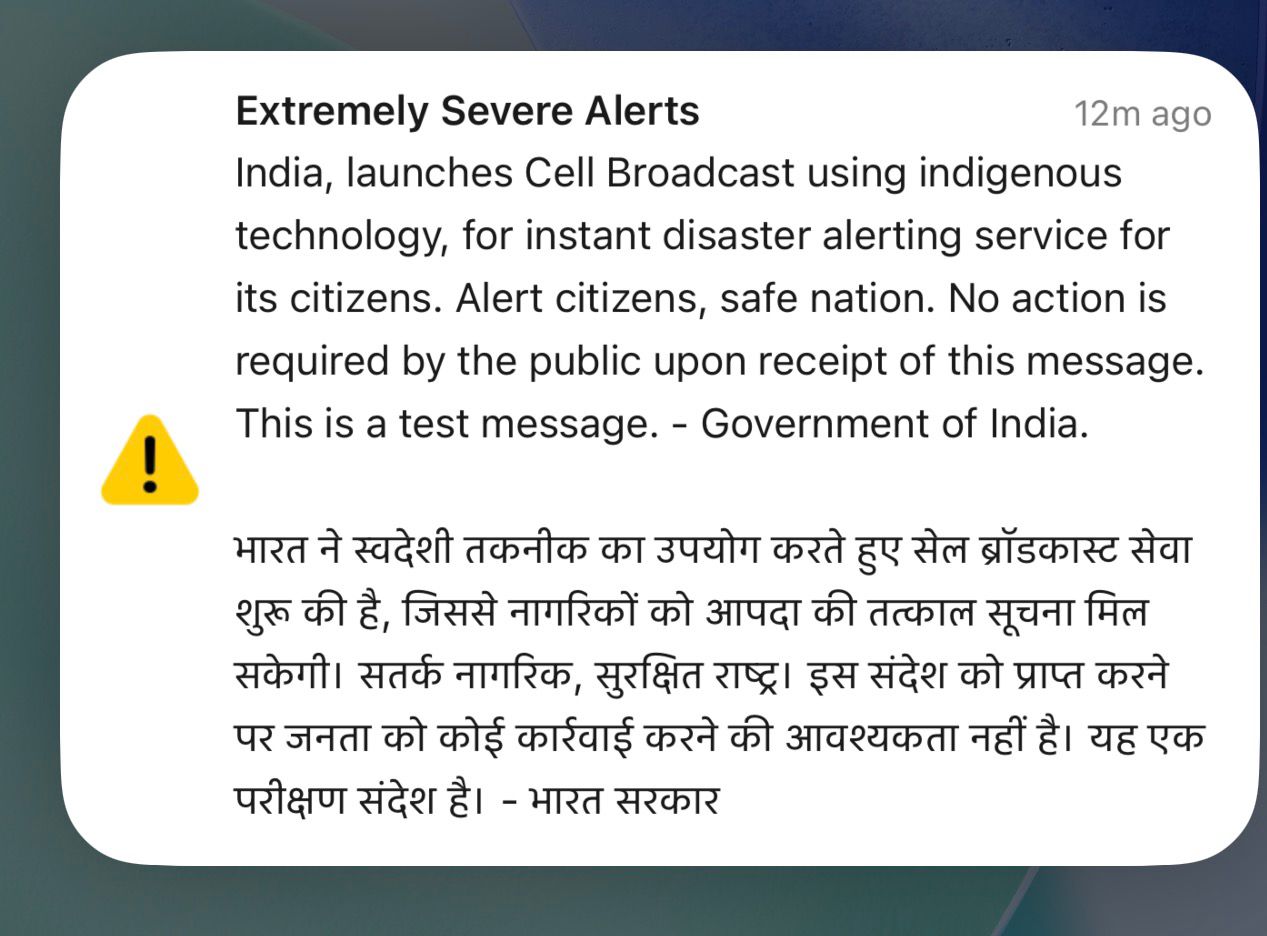
In a major step toward strengthening public safety and disaster preparedness, the Government of India has rolled out an indigenous Cell Broadcast technology to deliver real-time emergency alerts directly to citizens’ mobile phones.
The initiative is designed to ensure that critical warnings during natural disasters and emergencies reach people instantly—without relying on internet connectivity, mobile apps, or SMS delivery delays. The system enables authorities to broadcast alerts simultaneously to all mobile devices within a specific geographic area in seconds.
As part of nationwide testing, many citizens have recently received a message on their phones stating:
“Alert citizens, safe nation. No action is required by the public upon receipt of this message. This is a test message. – Government of India.”
Officials have clarified that this is only a test alert intended to evaluate the reach and effectiveness of the Cell Broadcast system.
What Is Cell Broadcast Technology?
Cell Broadcast is a location-based messaging service that sends text alerts to all mobile devices connected to particular cell towers. Unlike SMS, which is sent individually and can be delayed during network congestion, Cell Broadcast messages are delivered instantly and reliably to large populations—even when networks are overloaded during emergencies.
Why This Matters
India is prone to various natural disasters, including earthquakes, floods, cyclones, landslides, and tsunamis. Timely communication during such events can save thousands of lives. With this technology:
- Alerts can be issued within seconds
- Messages reach even basic mobile phones
- No mobile data or app installation is required
- Works during heavy network traffic
- Geo-targeted alerts ensure only affected areas are notified
Indigenous and Future-Ready
The system has been developed using indigenous technology, aligning with India’s vision for self-reliance in critical infrastructure. It is expected to be integrated with national disaster management networks to provide early warnings from meteorological and emergency agencies.
What Should Citizens Do?
During the testing phase, no action is required when receiving these messages. However, once fully operational, citizens are advised to carefully read and follow instructions included in real emergency alerts.
This initiative marks a significant leap in India’s disaster response capability—ensuring that vital information reaches every citizen when it matters the most.
A safer India begins with informed citizens.